
“Search Engine Marketing (SEM): A Complete Guide”
“Boost Your Online Visibility with Search Engine Marketing (SEM)”
“Learn how SEM can help you drive targeted traffic, generate leads, and grow your business.”
What Is Search Engine Marketing?
Search engine marketing (SEM) is a digital marketing practice aimed at improving a website’s visibility in search engines through paid ads and unpaid results.
With paid search marketing, your website appears in paid results. These results typically appear as “Sponsored.”
Search Engine Marketing is a powerful tool that can be tailored to different business types and goals. Whether you’re selling products, promoting services, or building awareness, SEM offers targeted solutions. Here are three key use cases:
🛒 1. eCommerce Stores
Goal: Drive product sales directly from search engines.
How SEM Helps:
High-Intent Keywords: Target users searching for terms like “buy wireless earbuds” or “best running shoes under $100.”
Product Ads (Shopping Ads): Google Shopping allows eCommerce stores to showcase product images, prices, and store names directly in search results.
Dynamic Remarketing: Ads can follow users who visited your site, reminding them of products they viewed.
🏪 2. Local Businesses
Goal: Attract nearby customers to physical locations or provide local services.
How SEM Helps:
Local Search Ads: Appear at the top when users search for services like “plumber near me” or “coffee shop in [city].”
Google Maps Integration: Your ads can appear in Maps, helping drive foot traffic.
Call Extensions: Enable people to call directly from the ad, especially effective for service providers.
📈 3. Lead Generation for Services
Goal: Collect inquiries, sign-ups, or appointments.
How SEM Helps:
Conversion Tracking: Measure the effectiveness of each keyword in generating leads.
Landing Pages with Forms: Direct users to a page that collects email addresses, bookings, or contact details.
Targeted Ad Copy: Tailor messages to specific industries (e.g., “Affordable Accounting Services for Small Businesses”).
SEM Platforms

Google Ads
Google Ads uses a real-time auction system where businesses bid on keywords to show their ads in search results. Ads are ranked based on bid amount, ad quality, and relevance. With the right keywords and targeting, businesses can drive traffic, generate leads, and achieve a strong return on investment.

Bing Ads
Bing Ads (Microsoft Advertising) uses a pay-per-click model where advertisers bid on keywords to show ads in Bing search results. Ads are ranked based on bid, relevance, and ad quality. The platform offers advanced targeting, including location, device, and even LinkedIn profile data, helping businesses reach specific audiences effectively.

YouTube Ads
YouTube Ads run through Google Ads and let businesses promote video content to targeted audiences. Advertisers can choose formats like skippable or non-skippable ads and target users by keywords, interests, or demographics—making it a powerful tool for both brand awareness and conversions.
Why SEM is Important?
- 🔍Instant visibility
- 🎯Targeted traffic
- 📊Measurable ROI
- 🧾Budget flexibilit
- 📍Geo-targeting
Types of SEM Ads
| TYPE | DESCRIPTION |
|---|---|
| Search Ads | Appear above organic search results |
| Display Ads | Shown on websites via Google Display Network |
| Shopping Ads | Appear for product-related searches |
| Remarketing Ads | Re-target previous site visitors |
| Video Ads | Displayed on YouTube and partner sites |
Social Media Marketing
What Is SMM [Social Media Marketing?
Social Media Marketing (SMM) is the use of social media platforms to promote products, services, or brands to connect with audiences, increase sales, and drive website traffic.
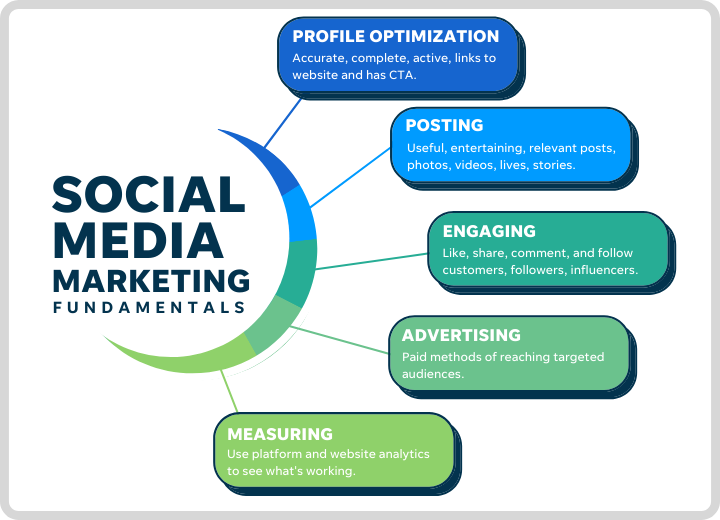
To succeed in social media marketing, businesses must start with profile optimization, ensuring their bio, profile picture, contact details, and links are clear, consistent, and aligned with their brand identity. Next comes posting — creating and sharing high-quality, relevant content regularly to attract and inform the audience. Effective posting includes a mix of formats like images, videos, carousels, and stories tailored to each platform. Engaging with followers is crucial; replying to comments and messages, running polls, or encouraging user-generated content builds trust and community. To expand reach, advertising plays a key role — using paid campaigns with precise targeting to promote products, boost visibility, or drive website traffic. Finally, measuring performance through analytics tools helps track metrics like engagement rate, reach, conversions, and ROI, enabling marketers to refine their strategies for better results.